Disclosure: 8 Sleep Alternative is affiliated with Good Sleep and may earn a commission from some links on this page. That never changes what we write; see our Affiliate Disclosure. Prices below were checked on manufacturer sites in October 2026 and change often.
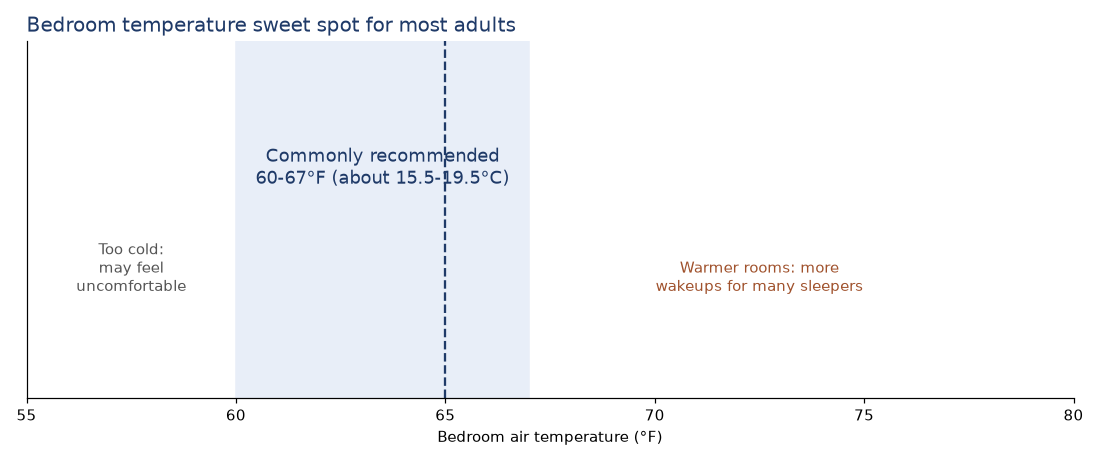
Most sleep experts suggest keeping your bedroom somewhere around 60 to 67°F (about 15.5 to 19.5°C), with many people sleeping best close to 65°F. That number is not arbitrary: it reflects how your body regulates temperature at night. In this guide we explain the why, what to do if you cannot get your room that cool, and how bed cooling fits in.
Why a cool room helps you sleep
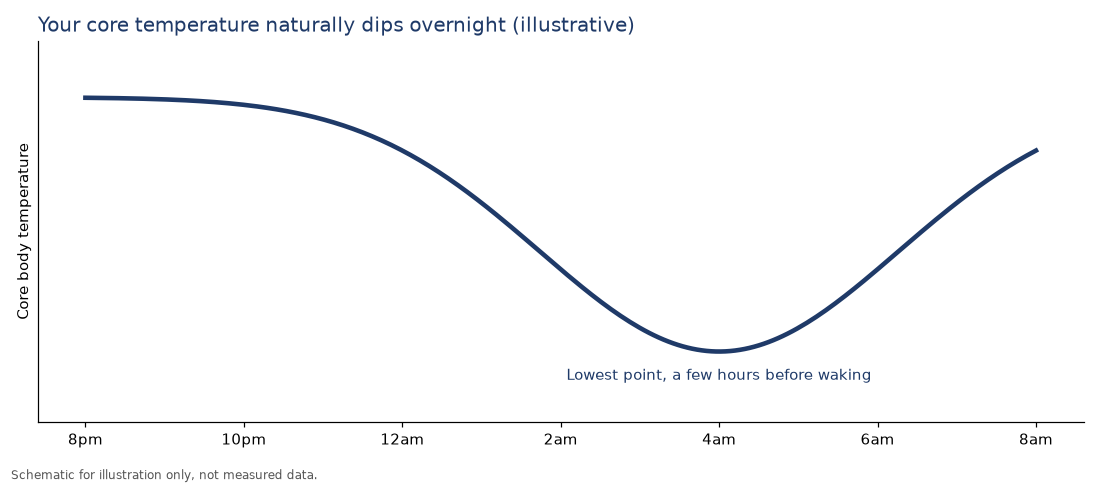
Sleep and body temperature are closely linked. In the evening, your body begins lowering its core temperature, partly by sending warm blood to your skin, especially your hands and feet, where heat can escape. This drop is one of the signals that helps you fall asleep. Your core temperature then reaches its low point in the early morning before rising again toward waking.
A cool, comfortable environment makes that heat loss easy. A warm room or a heat-trapping bed makes it harder, which can mean more tossing and turning, more awakenings and lighter sleep. People commonly notice they sleep worse during heat waves, and research on sleep and ambient temperature generally supports that experience.
Is 65°F right for everyone?
No. The 60-67°F range is a starting point. Factors that shift your ideal number include:
- Bedding: a heavy duvet means you need a cooler room; light linen means you can go warmer.
- Age: older adults and infants may need a slightly warmer room. Follow pediatric guidance for babies.
- Hormones: perimenopause and menopause can make you far more sensitive to heat.
- Body size and metabolism: some people simply run hot.
- Humidity: humid air feels warmer and slows sweat evaporation.
- Your partner: two people under one duvet generate a lot of heat.
Experiment in one- or two-degree steps for a few nights each and notice how you feel in the morning.
The difference between room temperature and bed temperature
Here is something many people miss: the temperature that matters most is the microclimate between you and your mattress. You can keep the room at 65°F and still overheat if you are sinking into dense memory foam under a thick comforter. That is why bed-level cooling exists. A water-cooled topper like the Good Sleep System or ChiliPad cools the surface itself, so you can sleep cool even if the room is a little warmer, or let a partner keep their side warmer. Learn more in best bed cooling systems for hot sleepers.
How to get your bedroom to the right temperature
If you have air conditioning
- Set the thermostat to drop an hour before bed so the room is already cool.
- Use a smart or programmable thermostat to warm up slightly before waking.
- Close vents in unused rooms to push more cool air to the bedroom (where safe for your system).
If you do not have air conditioning
- Close blinds and curtains during the day; blackout curtains block heat as well as light.
- Open windows at night when it is cooler outside and use a fan to pull cool air in.
- Place a fan to move air across the bed.
- Sleep on the lowest floor if your home allows; heat rises.
- Consider active bed cooling, which does not depend on cooling the whole room. Water systems in particular are less sensitive to room temperature than air-based ones.
Make the bed cooler
- Switch to breathable fabrics; see our bedding guide.
- Choose a cooling pillow; see best cooling pillow.
- If you have memory foam, read how to cool down a memory foam mattress.
Evening habits that help
- Warm shower or bath 1-2 hours before bed: it brings blood to the skin and helps your body dump heat afterward.
- Avoid intense exercise right before bed; earlier in the day is better.
- Limit alcohol and heavy meals late at night; both can raise nighttime temperature and fragment sleep.
- Keep the room dark and quiet for overall sleep quality.
Warm-sleeping couples
If one of you wants 62°F and the other wants 72°F, the room thermostat cannot satisfy both. Separate blankets help a lot (a common practice in parts of Europe), and dual-zone systems such as Good Sleep’s King, ChiliPad dual-zone or Eight Sleep let each side be set independently. See our comparison page.
Humidity matters too
Temperature gets the attention, but humidity changes how a temperature feels. In humid air, sweat evaporates slowly, so you feel hotter and stickier at the same thermostat setting. Many people are comfortable with indoor relative humidity somewhere in the middle range. A dehumidifier or air conditioner can help in muggy climates, while very dry winter air can irritate your nose and throat. If you live somewhere humid, bedding that wicks moisture and an active cooling system become even more valuable.
Seasonal adjustments
Your ideal setup will shift with the seasons. In summer, use lighter bedding and pre-cool the room. In winter, many people keep the room cool but warm the bed briefly before getting in, which several active systems can do.
Special cases
Older adults
Some older adults feel colder and may prefer the warmer end of the range or extra layers. Thermoregulation can change with age, so comfort should guide the setting.
Pregnancy
Many pregnant people run warmer and prefer a cooler room. Talk to your healthcare provider about any concerns.
Menopause
Hot flashes make a cool room and adjustable bedding especially important; our sister site Menopause Solved covers this in depth.
Athletes and heavy exercisers
Hard evening workouts raise body temperature for a while. Finish intense training a few hours before bed when you can, and keep the room on the cool side.
Find your personal number in two weeks
- Buy an inexpensive room thermometer and put it near the bed, not by the thermostat.
- Week one: set the room to 67°F and note wake-ups and how you feel each morning.
- Every two or three nights, drop one or two degrees until you reach about 62°F.
- Pick the setting where you woke up least and felt best.
- If your partner disagrees, use the warmer room setting and cool your own side with bedding or a bed cooling system.
Room temperature and your energy bill
Cooling the whole house to 65°F all night can be expensive in hot climates. One alternative is to keep the thermostat a few degrees warmer and cool the bed directly. A bed cooling system only has to cool a thin surface rather than an entire room of air, which is why brands like Good Sleep promote it as a way to avoid raising your A/C bill. Your actual savings depend on your climate and system.
Common bedroom temperature mistakes
- Trusting the hallway thermostat. Bedrooms, especially upstairs, can run several degrees warmer.
- Cooling the room too late. Start an hour before bed.
- Heavy bedding in a cool room. A 65°F room under a winter duvet can still feel hot.
- Ignoring humidity. Muggy air feels warmer than the thermometer says.
How we researched this article
The 60-67°F range reflects widely cited guidance from sleep organizations and sleep medicine sources on thermoregulation and sleep; product notes come from manufacturer pages checked in October 2026. We do not invent test results, ratings or quotes, and because we are affiliated with Good Sleep we flag where competitors are stronger.
The bottom line
Aim for a cool, comfortable bedroom, roughly 60-67°F for most adults, and fine-tune from there. Remember that what you feel is the combination of room air, bedding and the mattress surface. If you cannot get the room cool enough, or a partner wants it warmer, cooling the bed directly is an effective workaround. Track your sleep for a couple of weeks as you adjust, and you will find your own best number.
For bed-level solutions, compare water and air systems on our comparison page.
Frequently Asked Questions
What is the best temperature to sleep at?
A bedroom around 60-67°F (15.5-19.5°C) suits most adults, with 65°F a common target. Adjust based on bedding and personal comfort.
Is 70°F too warm for sleeping?
Many people sleep fine at 70°F with light bedding, but if you wake up hot, try lowering it a few degrees or cooling your bed directly.
Is it bad to sleep in a cold room?
Very cold rooms can be uncomfortable and make it hard to fall asleep. Aim for cool, not cold, and use layers you can adjust.
What temperature should a baby’s room be?
Follow your pediatrician’s guidance and safe sleep recommendations, which differ from adult advice.
Can a cooling mattress pad replace air conditioning?
Not fully, but water-based pads cool the sleep surface effectively and can make a warmer room tolerable. Air-based systems like BedJet work best with rooms below about 79°F.
Should the bedroom be cooler than the rest of the house?
Often, yes. Many people keep living areas warmer during the day and cool the bedroom in the evening. A programmable thermostat or a bed cooling system makes this easier.
Does a fan count toward cooling?
A fan does not lower air temperature, but moving air helps sweat evaporate and makes you feel cooler, which effectively lets you sleep comfortably in a slightly warmer room.
What if my partner wants a warmer room?
Set the room to the warmer person’s comfort, then cool the hot sleeper’s side with lighter bedding, a separate blanket or a dual-zone bed cooling system. That way neither of you has to compromise all night.
Affiliate Disclosure: This article contains affiliate links. If you purchase through our links, we earn a commission at no extra cost to you. Our editorial recommendations are based on genuine research and are not influenced by commission rates. Read our full disclosure policy.
8Sleep Alternative Editorial Team
Independent researchers focused on temperature-controlled sleep technology. We test products against published sleep science and provide unbiased comparisons for consumers.