Disclosure: 8 Sleep Alternative is affiliated with Good Sleep and may earn a commission from some links on this page. That never changes what we write; see our Affiliate Disclosure. Prices below were checked on manufacturer sites in October 2026 and change often.
Waking up drenched is miserable, and it wrecks sleep quality. Night sweats have many causes, including menopause and perimenopause, medications, infections, alcohol and other medical conditions, and the bedding you sleep in can either help or make things much worse. This guide covers the bedding choices that make the biggest difference.
Important: if night sweats are new, frequent or come with fever, weight loss or other symptoms, talk to a healthcare provider. If menopause is the cause, our sister site Menopause Solved covers symptoms and options in depth.
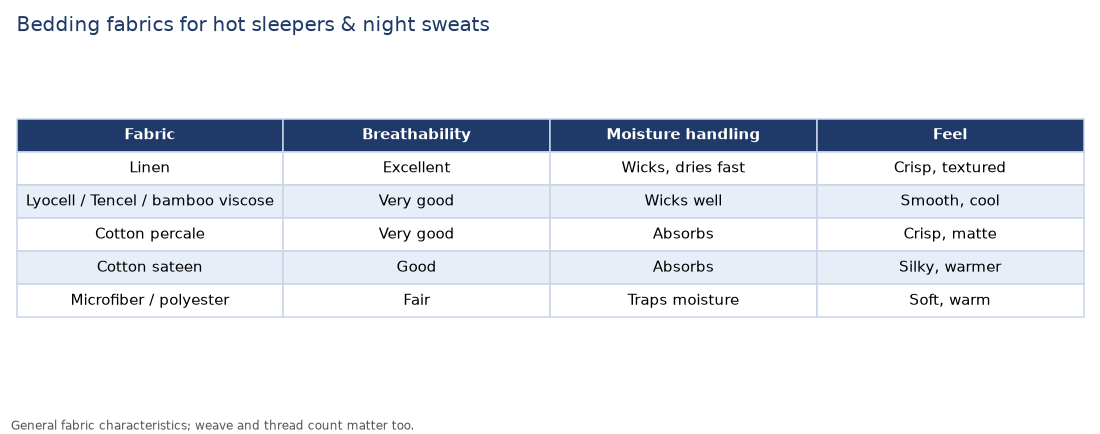
Step 1: Choose breathable, moisture-friendly sheets
Sheets are the layer touching your skin, so they matter most for comfort when you sweat.
- Linen: extremely breathable, dries quickly, gets softer with washing. A favorite for hot sleepers.
- Lyocell / Tencel and bamboo-derived viscose: smooth, cool feel and good moisture wicking.
- Cotton percale: crisp, breathable weave; absorbs moisture well.
- Avoid microfiber and polyester: they tend to trap heat and moisture.
- Sateen: silky but a tighter weave that sleeps warmer than percale.
Thread count is less important than fiber and weave. A mid-range percale or linen sheet often sleeps cooler than a very high thread-count sateen.
Step 2: Rethink the mattress protector
If you sweat heavily you probably want to protect your mattress, but plastic or vinyl-backed protectors trap heat. Look for thin, breathable waterproof protectors, and if you use an active cooling pad, follow the manufacturer’s guidance on what can go between you and the pad.
Step 3: Lighten the top layers
- Use layers you can kick off: a light quilt or cotton blanket plus a top sheet.
- Consider separate blankets if your partner runs cold.
- Wool can regulate temperature and moisture well for some people; lightweight versions exist.
- Keep a spare dry layer nearby for quick changes.
Step 4: Pick a cooler pillow
Buckwheat, latex and shredded fills breathe better than solid foam. Pair with a linen or percale pillowcase. More in best cooling pillow.
Step 5: Cool the sleep surface
Bedding helps you cope with sweat; cooling the surface can reduce how much you sweat in the first place. Options:
- Passive toppers (latex, PCM) reduce trapped heat; see best cooling toppers.
- Air systems like BedJet dry sweat quickly and work best below ~79°F room temperature.
- Water systems actively pull heat from your body all night. the Good Sleep System cools to 62°F with a simple touch panel and dual-zone on King, so a partner can stay warmer. ChiliPad and Eight Sleep are other options.
Compare active systems on our comparison page and in water vs air cooling.
Step 6: Set up the room
- Keep it around 60-67°F; see ideal bedroom temperature.
- Run a fan for airflow and evaporation.
- Use blackout curtains to keep daytime heat out.
- Keep a glass of cold water by the bed.
Habits that can reduce night sweats
- Limit alcohol, spicy food and caffeine in the evening; these can be triggers for some people.
- Wear light, moisture-wicking sleepwear, or none.
- Try a lukewarm shower before bed.
- Track your episodes to discuss patterns with your doctor.
A sample cool-sleep setup
| Layer | Pick |
|---|---|
| Surface cooling | Water-cooled topper (or BedJet in an A/C room) |
| Protector | Thin, breathable waterproof |
| Sheets | Linen or percale |
| Top layer | Light quilt + spare blanket |
| Pillow | Latex or buckwheat with linen case |
| Room | 60-67°F, fan, blackout curtains |
Washing and caring for sweaty bedding
Sweat, body oils and skin cells build up quickly when you sweat at night, which can make sheets feel heavier and less breathable over time. Wash sheets and pillowcases at least weekly, and more often during bad stretches. Avoid heavy fabric softeners, which coat fibers and can reduce moisture wicking; for linen and lyocell, follow care labels. Rotating two or three sheet sets means you always have a fresh, dry set ready.
Sleepwear matters too
Loose, breathable sleepwear in cotton, linen, or moisture-wicking fabrics helps. Some people with night sweats prefer sleeping with minimal clothing and a light top sheet. Keep a spare set of sleepwear and a towel nearby so a mid-night episode does not turn into a full wake-up.
Partners with different needs
Night sweats often affect one partner more than the other. Separate blankets, a dual-zone cooling system and layered bedding let each person stay comfortable without a nightly negotiation over the thermostat.
Choosing a cooling system for night sweats
When bedding alone is not enough, an active system can reduce how hot you get. Here is how the options compare for sweat specifically:
| System | Strength for night sweats | Consider |
|---|---|---|
| Water (Good Sleep, ChiliPad, Eight Sleep) | Keeps the surface cool, reducing overheating | Higher cost; refill and clean |
| Air (BedJet) | Dries sweat fast with airflow | Works best below ~79°F room temperature |
| Passive topper | Reduces trapped heat a little | Cannot keep up with heavy sweats |
For couples, a dual-zone system lets the person with night sweats run cold while a partner stays warm. Good Sleep’s King, dual-zone ChiliPad and Eight Sleep all offer this.
Waterproofing without the heat
If heavy sweating worries you about your mattress, look for protectors described as breathable with a thin waterproof membrane rather than vinyl. Some active pads include built-in waterproofing; Sleepme says ChiliPad 2.0’s cover has integrated waterproof protection. Check your cooling system’s guidance before adding layers.
When to talk to a doctor
See a healthcare provider if night sweats are new, frequent or severe, or come with fever, unexplained weight loss, or other symptoms. Menopause is a very common cause, but not the only one.
Build your setup in stages
Bedding changes are cheaper than devices, so start there and add as needed:
- Week 1: switch to linen or percale sheets and a breathable protector.
- Week 2: replace a heavy duvet with layers you can remove.
- Week 3: add a fan and lower the room temperature.
- Week 4: if sweats still wake you, consider an active cooling system.
Keep a night sweats log
Note the date, time of waking, how soaked you were, and anything unusual that day (alcohol, spicy food, stress, medications). Over a few weeks, patterns often emerge, and the log is useful to bring to a doctor appointment.
Bedding mistakes that worsen night sweats
- Microfiber sheets that hold moisture against your skin.
- Plastic-backed protectors that trap heat.
- One heavy comforter instead of adjustable layers.
- Fabric softener buildup that reduces wicking.
How we researched this article
We used general textile characteristics, mattress and bedding manufacturer guidance, and official specs from Good Sleep, Sleepme and BedJet checked in October 2026. Medical context is general; see a clinician and Menopause Solved for more. We do not invent test results, ratings or quotes, and because we are affiliated with Good Sleep we flag where competitors are stronger.
Bedding checklist
- Two or three sets of linen, lyocell or percale sheets for easy rotation.
- A thin, breathable waterproof protector.
- A light quilt plus a separate blanket you can remove.
- A latex or buckwheat pillow with a breathable case.
- Breathable sleepwear and a spare set by the bed.
- A fan and, if needed, an active cooling system.
Bottom line
The right bedding will not stop night sweats on its own, but it makes them far more manageable, keeping you drier and helping you fall back asleep faster. Start with breathable, quick-drying sheets and adjustable layers, cool the room, and add an active cooling system if sweats still wake you. And because night sweats can have medical causes, keep your doctor in the loop, especially if they are new or getting worse. Small, consistent changes to your bed and bedroom usually add up to noticeably better nights.
Frequently Asked Questions
What sheets are best for night sweats?
Linen, lyocell (Tencel) and cotton percale are among the best due to breathability and moisture handling. Avoid polyester microfiber.
Do cooling mattress pads help night sweats?
Active pads, especially water-based ones, can reduce overheating that triggers sweating. Passive pads help less.
What causes night sweats?
Common causes include menopause, medications, alcohol, infections and other medical conditions. See a provider if they are persistent or come with other symptoms.
Is it better to sleep with a fan for night sweats?
A fan helps sweat evaporate and moves heat away. It pairs well with breathable bedding.
Where can I learn more about menopause night sweats?
Visit Menopause Solved at menopausesolved.com for menopause-specific guidance.
How often should I wash sheets if I have night sweats?
At least weekly, and more often during heavy stretches. Rotating multiple sheet sets helps.
Is wool good for night sweats?
Lightweight wool can regulate moisture and temperature well for some people, but it feels different from cotton or linen. Try a wool blanket layer before committing.
Are bamboo sheets good for night sweats?
Bamboo-derived viscose or lyocell sheets feel cool and wick moisture well, making them a popular choice.
Should I use a waterproof mattress protector?
A thin, breathable waterproof protector can protect your mattress without trapping much heat. Avoid vinyl-backed versions.
Can a cooling pad stop night sweats?
It may reduce overheating that triggers sweating, but it will not treat an underlying cause. See a doctor if sweats persist.
What sleepwear is best for night sweats?
Loose, lightweight sleepwear in cotton, linen or moisture-wicking technical fabric. Avoid fleece and tight synthetic fabrics. Keep a spare set nearby so a mid-night change takes seconds, and consider sleeping with fewer layers on hot nights.
Affiliate Disclosure: This article contains affiliate links. If you purchase through our links, we earn a commission at no extra cost to you. Our editorial recommendations are based on genuine research and are not influenced by commission rates. Read our full disclosure policy.
8Sleep Alternative Editorial Team
Independent researchers focused on temperature-controlled sleep technology. We test products against published sleep science and provide unbiased comparisons for consumers.