Disclosure: 8 Sleep Alternative is affiliated with Good Sleep and may earn a commission from some links on this page. That never changes what we write; see our Affiliate Disclosure. Prices below were checked on manufacturer sites in October 2026 and change often.
Your head and face are sensitive to heat, and a pillow that warms up halfway through the night can be enough to wake you. A good cooling pillow combines breathable materials, airflow and the right support for your sleep position. Rather than push a single product, this guide explains which materials sleep coolest and how to choose based on how you sleep.
Why pillows get hot
Pillows sit right against your skin for hours. Dense solid foam and tightly packed polyester fill hold heat and do not let air move. Synthetic covers trap moisture. Over the night, the pillow reaches your skin temperature and you start hunting for the “cool side.”
Cooling pillow materials compared
| Material | How cool | Support | Notes |
|---|---|---|---|
| Buckwheat hulls | Very cool, lots of airflow | Firm, moldable | Noisy rustle; heavy |
| Natural latex (pin-cored or shredded) | Cool, breathable | Responsive, springy | Durable; latex allergy caution |
| Shredded memory foam | Moderate-cool | Adjustable loft | Cooler than solid foam |
| Gel-infused or gel-layer foam | Cool to touch at first | Contouring | Gel saturates over time |
| Down / down alternative | Moderate | Soft, squishy | Breathable covers help |
| Solid memory foam | Warm | Consistent | Look for ventilated designs |
| PCM-covered pillows | Cool to touch | Depends on core | Buffers heat temporarily |
What to look for
- Airflow: shredded fills, buckwheat and pin-cored latex let air move.
- Breathable cover: cotton percale, linen, lyocell or PCM fabrics.
- Adjustable loft: removable fill lets you dial in height without sinking in too deep.
- Washability: hot sleepers sweat; a removable, washable cover is a must.
- Trial period: pillows are personal; a trial lets you test support.
Choose by sleep position
Side sleepers
Need a higher loft to fill the gap between shoulder and head. Shredded latex or shredded foam with adjustable fill works well and stays cooler than solid foam.
Back sleepers
Medium loft that supports the neck curve. Latex, buckwheat or a contoured ventilated foam pillow are good cooler options.
Stomach sleepers
Low loft to avoid straining the neck. A thin down-alternative or low-profile latex pillow with a breathable cover.
Do cooling pillows actually work?
The honest answer mirrors cooling mattress pads: breathable pillows trap less heat, and cool-to-touch fabrics feel nice, but no passive pillow actively removes heat all night. They work best as part of a cool sleep setup. If your whole body runs hot, start with the room and the mattress surface; see do cooling mattress pads work? and best bed cooling systems.
Pair your pillow with the rest of your bed
- A cool pillow on a heat-trapping mattress only goes so far. A water-cooled topper like the Good Sleep System handles the bigger heat source: your back and torso.
- Use matching breathable pillowcases; see our bedding guide.
- Keep the room around 60-67°F; see ideal bedroom temperature.
Care tips
- Wash pillowcases weekly, more often if you sweat a lot.
- Use a breathable pillow protector rather than a plastic one.
- Fluff shredded pillows daily to keep airflow.
- Replace pillows when they lose support or smell persistently.
Pillow loft and heat
Loft (height) affects temperature more than people expect. A pillow that is too soft lets your head sink in, which wraps more material around your face and neck and traps heat. A pillow with the right loft for your position keeps your head on top, with more air around you. Adjustable shredded pillows are a good way to experiment.
Allergies and materials
If you have a latex allergy, avoid natural latex fills. Down can bother some allergy sufferers; down alternatives and encasements help. Buckwheat should be kept dry and aired out periodically. Whatever you choose, a washable cover keeps sweat and allergens in check.
Budget guide
You do not need to spend a lot. A breathable shredded-fill pillow with a cotton or lyocell cover is often a better buy than an expensive solid foam pillow that markets “cooling gel.” Spend more on materials and adjustability, not on cooling buzzwords. And remember that your back and torso release far more heat than your head, so if you are budgeting for a cooler night overall, the mattress surface is the bigger win.
Cooling pillow materials in more depth
Buckwheat
Buckwheat hulls are loose shells that leave lots of air space, which makes them one of the coolest fills. They conform firmly and hold their shape, which many back and side sleepers like. Downsides are weight and a rustling sound when you move.
Latex
Latex is naturally springy and, in pin-cored or shredded form, breathes well. It is durable and supportive. Choose shredded latex if you want adjustable loft. Avoid it if you have a latex allergy.
Shredded memory foam
Shredding foam creates air gaps, so it sleeps cooler than a solid block. It is adjustable and contouring, a good middle ground for people who like foam’s feel.
Down and down alternative
Soft and breathable in principle, but can trap heat when you sink deep into a plush pillow. A percale or linen cover helps.
Gel and PCM
These add a cool-to-touch effect on top of the core. Useful for falling asleep, but not a substitute for a breathable core.
How your pillow fits into a cool bed
Your head is only one part of the picture. If you overheat everywhere, see our mattress topper and bed cooling system guides. A cool pillow on a hot mattress is still a hot bed.
How to test a cooling pillow
Pillows are personal, so use the trial or return window properly:
- Sleep on it for at least a week before judging; new fills often need breaking in.
- Check how warm it feels after an hour, not just when you first lie down.
- Adjust the loft (if it has removable fill) in small amounts over several nights.
- Pay attention to neck stiffness in the morning; a cool pillow that hurts your neck is not the right pillow.
Quick picks by need
| If you want… | Look for |
|---|---|
| Maximum airflow | Buckwheat hull pillow |
| Cool and springy | Pin-cored or shredded latex |
| Adjustable comfort | Shredded foam or latex with removable fill |
| Soft and squishy | Down alternative with a percale or lyocell cover |
| Cool first touch | PCM-covered pillow |
Whatever you choose, pair it with breathable sheets and a cool room for the best results.
Cooling pillow mistakes
- Buying on “cooling gel” claims alone. The core material matters more.
- Choosing the wrong loft for your sleep position.
- Using a polyester pillowcase on a breathable pillow.
- Never washing the cover, which reduces breathability over time.
How we researched this article
This guide is based on general material characteristics of pillow fills and fabrics and established sleep-product reviews. We did not lab-test individual pillows, so we focus on materials rather than ranking specific products. We do not invent test results, ratings or quotes, and because we are affiliated with Good Sleep we flag where competitors are stronger.
Pillowcases make a difference
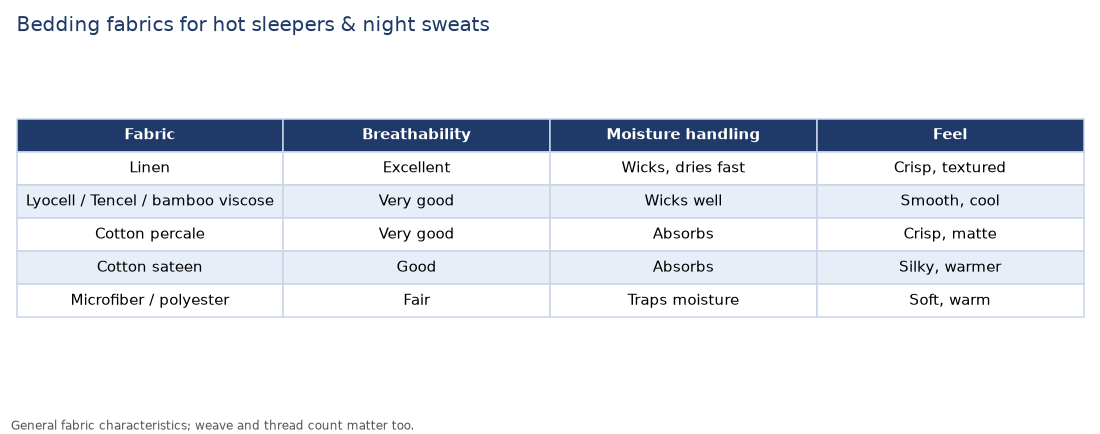
The pillowcase is the layer your face actually touches, so it matters as much as the fill. Linen and cotton percale breathe well and stay crisp; lyocell feels smooth and cool and handles moisture well; silk feels cool to the touch but is less absorbent. Avoid polyester satin and microfiber if you sleep hot, since they tend to trap heat and moisture. Many hot sleepers keep two pillowcases and flip or swap mid-night for a quick reset.
Bottom line
The best cooling pillow is one with a breathable core, a breathable cover and the right loft for your sleep position. Buckwheat and latex lead for airflow, shredded fills for adjustability. Treat “cooling gel” as a bonus rather than the main feature, and pair your pillow with a cool mattress surface and room for the biggest overall improvement.
Frequently Asked Questions
What pillow material sleeps the coolest?
Buckwheat hulls and pin-cored or shredded latex tend to sleep coolest due to airflow. Breathable covers help any pillow.
Are gel pillows actually cooler?
They feel cooler at first. Gel absorbs heat and eventually warms up, so effects are strongest early in the night.
How often should I replace a cooling pillow?
It depends on material; many pillows need replacing every 1-3 years, latex and buckwheat often last longer.
Can a cooling pillow help with night sweats?
It can help your head and neck feel more comfortable, but night sweats usually call for a cooler mattress surface and moisture-wicking bedding too.
Is a cooling pillowcase enough?
A breathable pillowcase helps, but a pillow with a dense, heat-trapping core will still warm up.
Should hot sleepers avoid memory foam pillows?
Not necessarily. Shredded or ventilated memory foam pillows sleep much cooler than solid blocks. Solid foam is usually the warmest option.
Are buckwheat pillows hard to get used to?
Some people find them firm and noisy at first. Removing some hulls to lower the loft often makes them more comfortable.
Do cooling pillows lose their effect?
Gel and PCM effects can fade with heavy use and washing. Breathable fills like latex and buckwheat keep their airflow over time.
What pillow is best for night sweats?
A breathable fill with a moisture-wicking cover, plus a spare pillowcase to swap mid-night.
What is the best pillow for side sleepers who run hot?
Look for a higher-loft shredded latex or shredded foam pillow with removable fill and a breathable cover. It fills the shoulder gap while letting air move, and you can lower the loft if needed.
Affiliate Disclosure: This article contains affiliate links. If you purchase through our links, we earn a commission at no extra cost to you. Our editorial recommendations are based on genuine research and are not influenced by commission rates. Read our full disclosure policy.
8Sleep Alternative Editorial Team
Independent researchers focused on temperature-controlled sleep technology. We test products against published sleep science and provide unbiased comparisons for consumers.